Overview
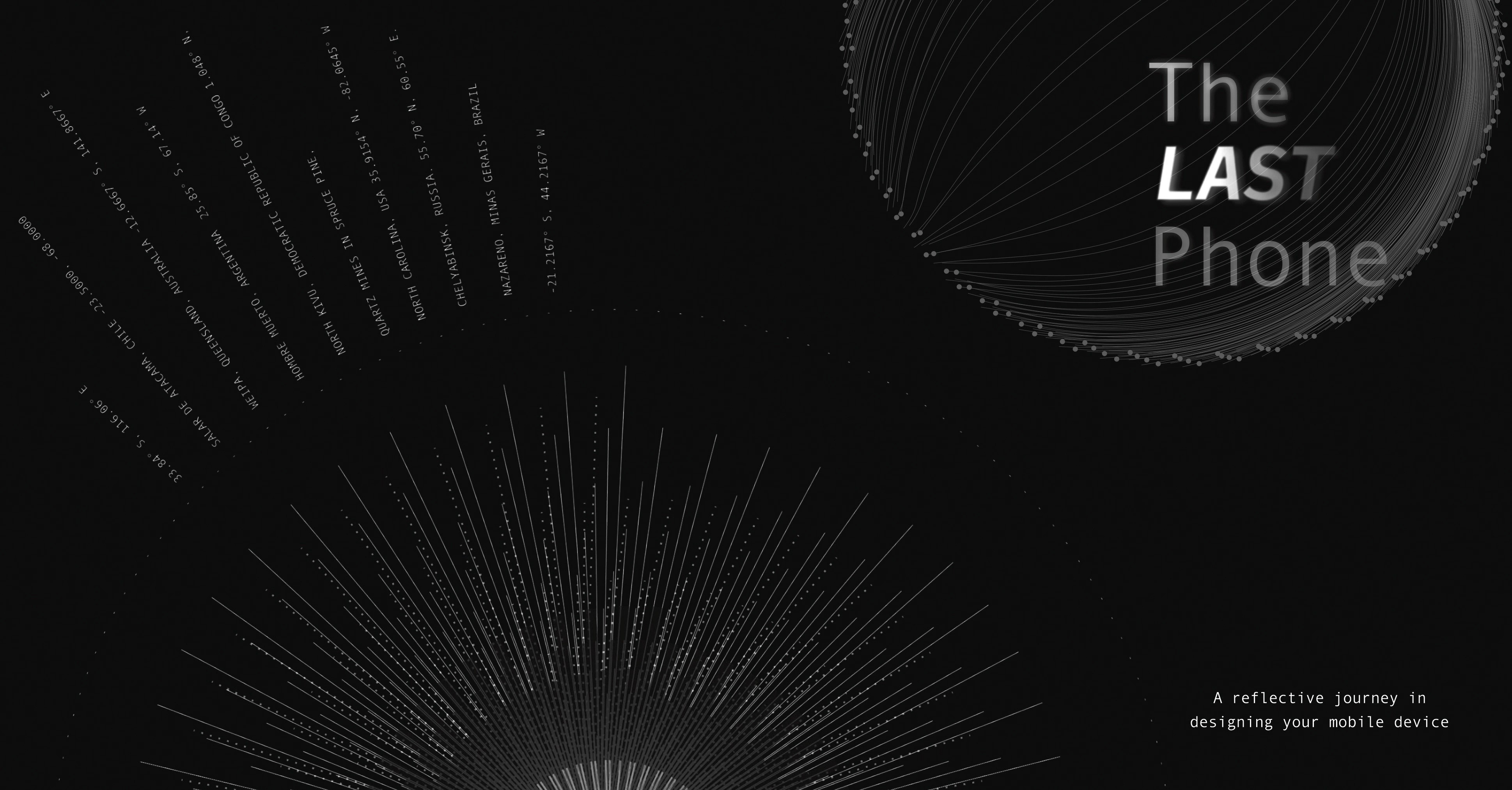
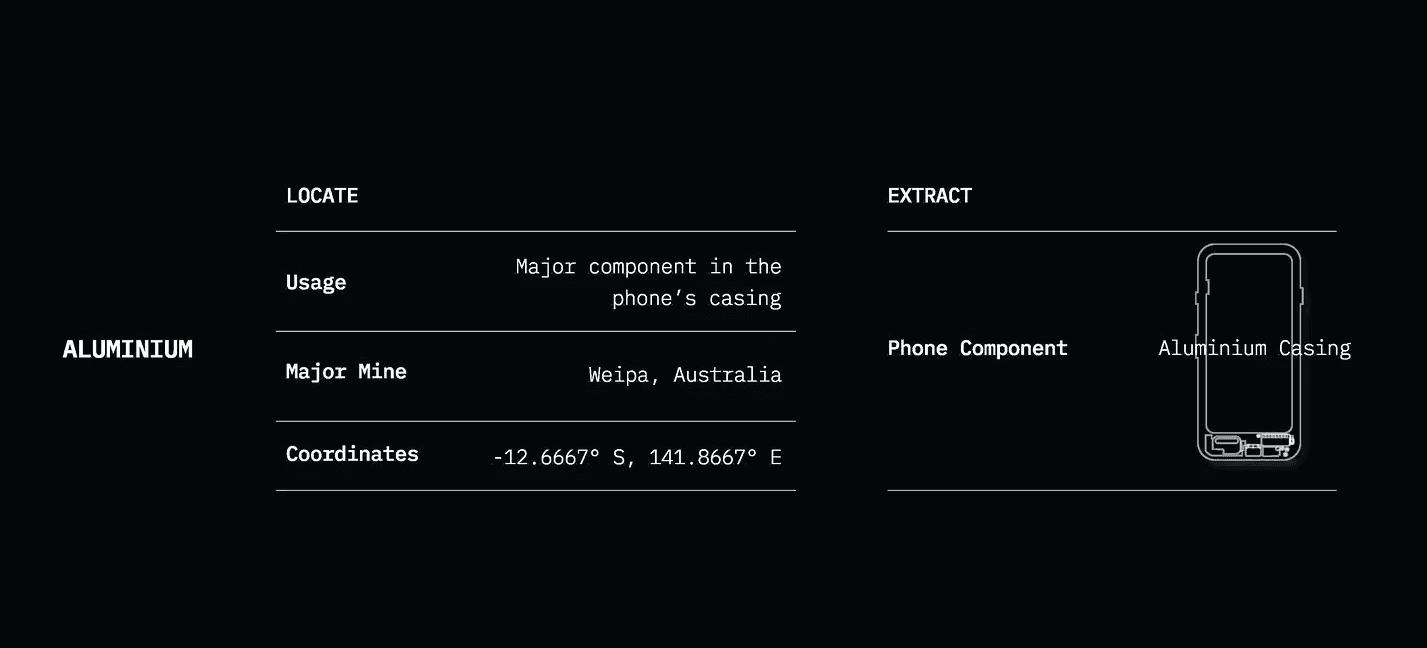
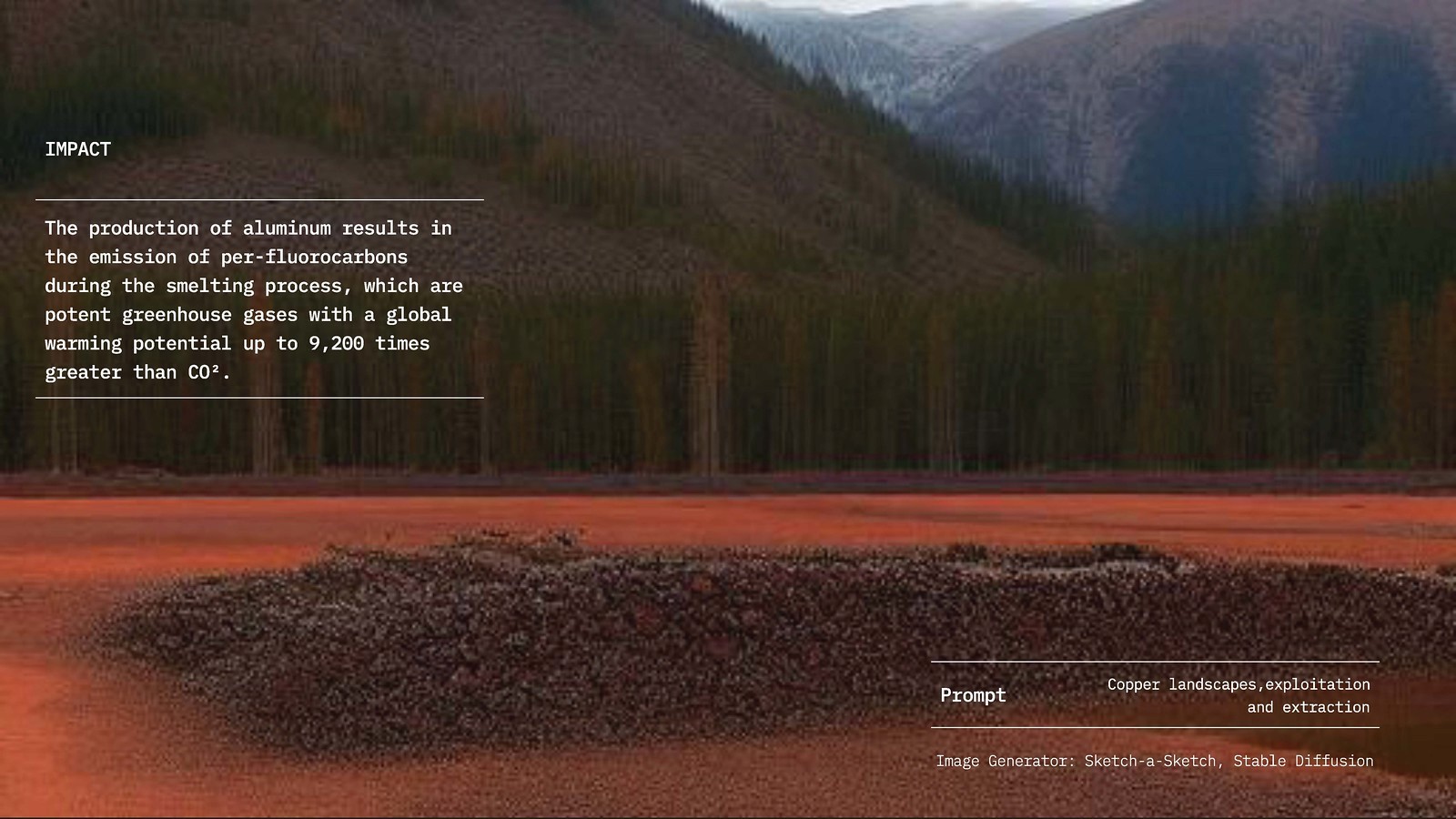
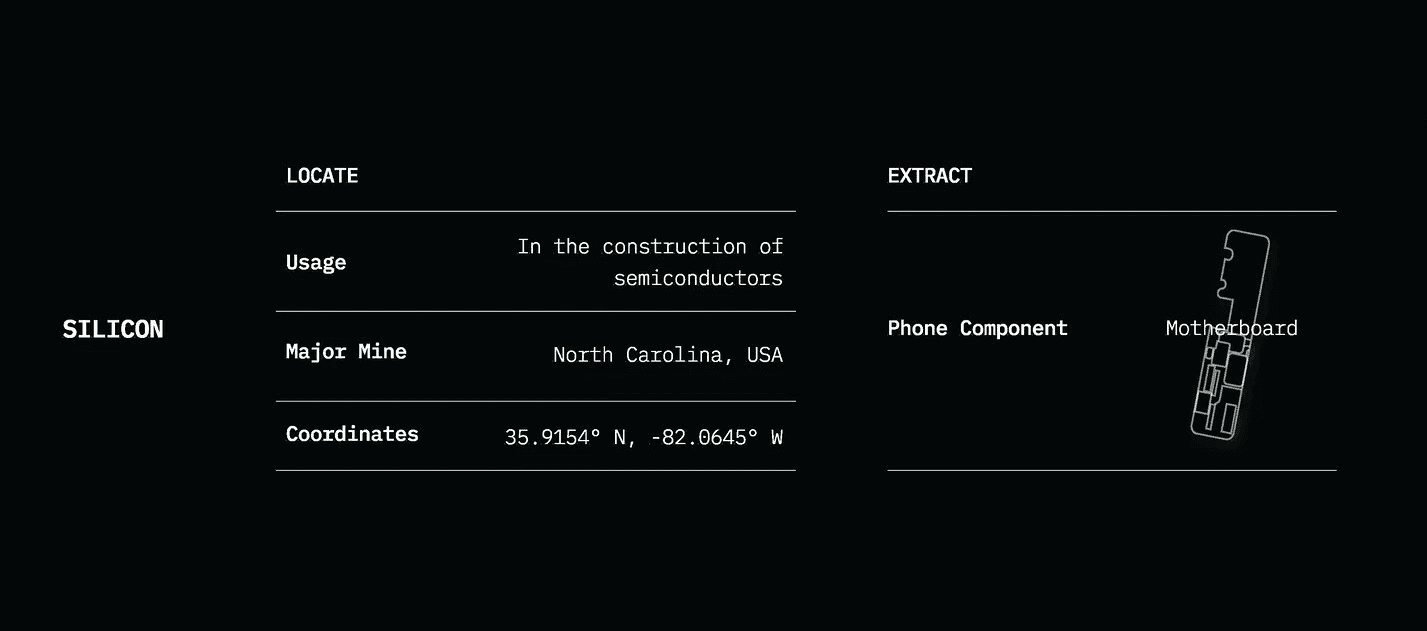
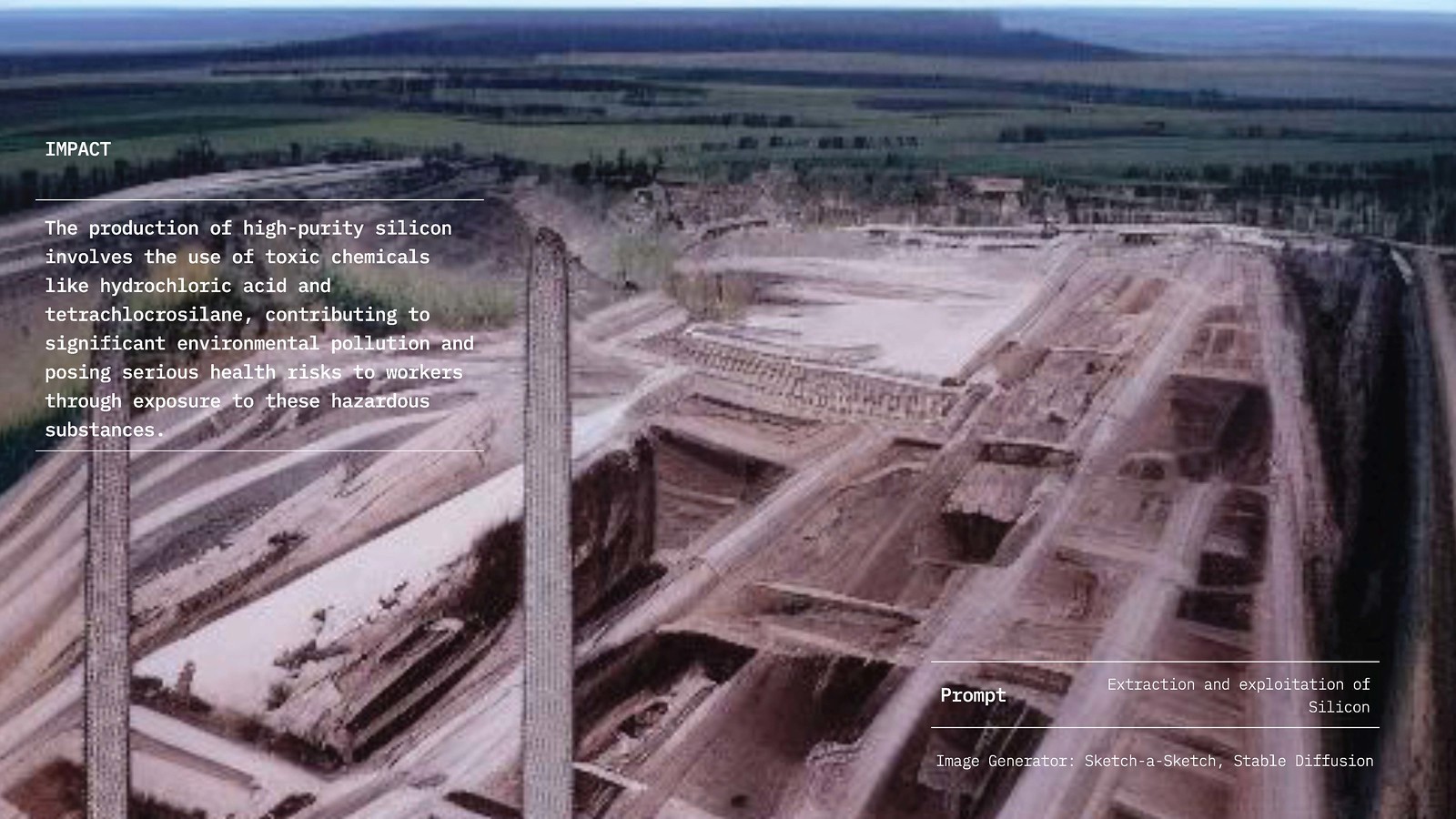
We explore the hidden impacts of smartphone use through The LAST Phone, an interactive experience that reveals the real-time ecological and human costs behind our devices. Using machine learning and projection, the project makes invisible systems visible—tracing how everyday phone interactions connect to global networks of mineral extraction, labor, and environmental impact. Expanding on this, the project highlights how expansive systems of exploitation underpin the mobile devices we use every day. While focusing on the extraction and impact of four critical minerals, it also points to the broader network of human and natural resources involved. Each smartphone becomes a lens into a complex, often invisible chain of mining, manufacturing, and distribution that shapes our relationship with technology.
Role
LED GRAPHIC DESIGN UX RESEARCH
Year
2024 6 WEEKS
Client
The Frank-Ratchye Studio
Tool
ADOBE SUITES FIGMA RASPBERRY PI GOOGLE COLAB STABLE DIFFUSION
COLLABORATORS
1 UX Researcher 1 Machine Learning Engineer
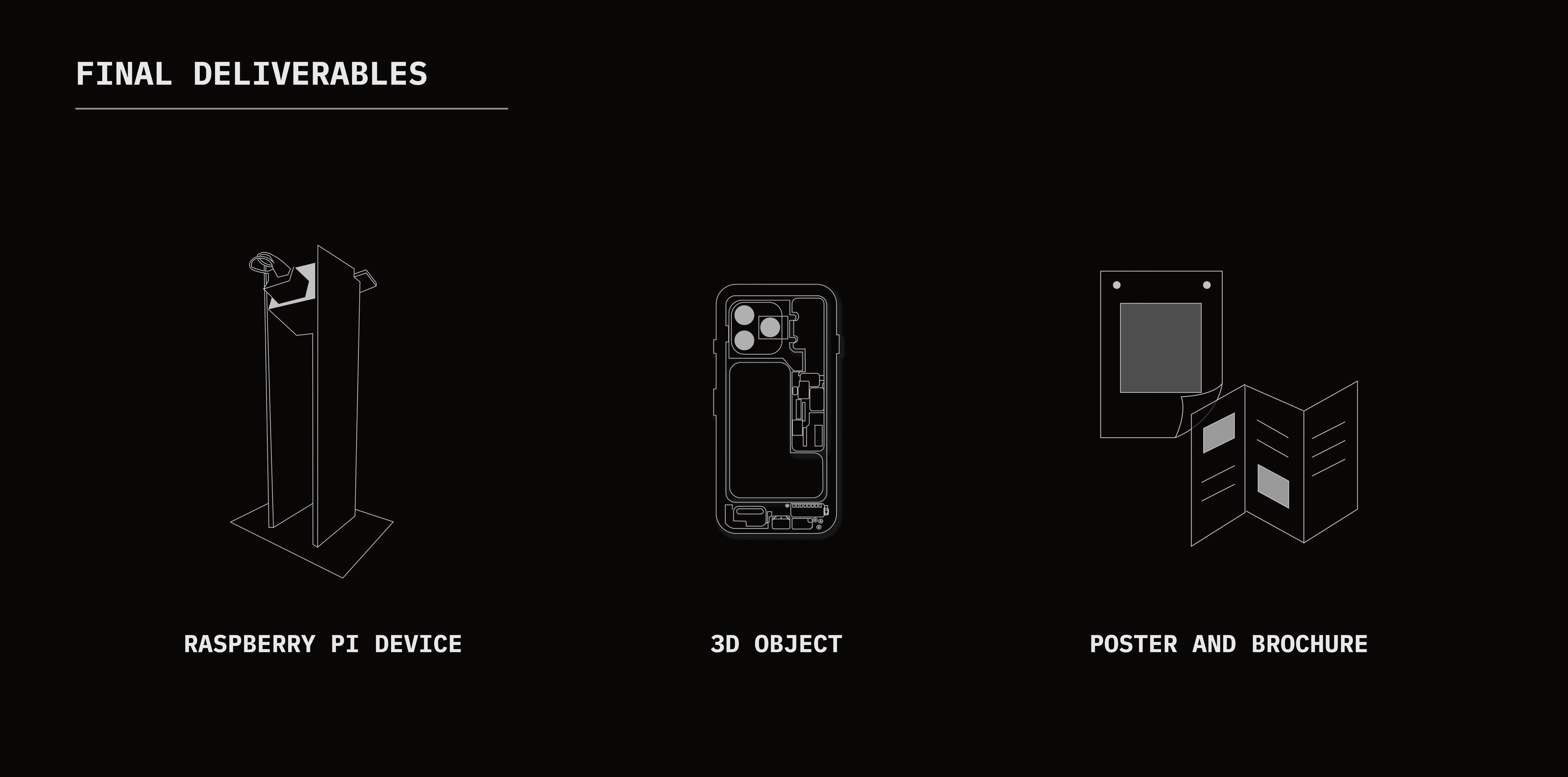
Its impact can be projected through engagement metrics, and insights from comparable interactive experiences.
60%
Participants
Awareness
20%
Behavioral Reflection
Scalable Data Visualization
Our research aimed to understand both the human and ecological impact of smartphones, as well as how to communicate these complex systems effectively through interactive design. We combined extensive literature review, comparative analysis, technical exploration, and user testing to identify the most impactful approach.
25+
Literature
Review
15+
Comparative Analysis
8+
User Testing
Sessions
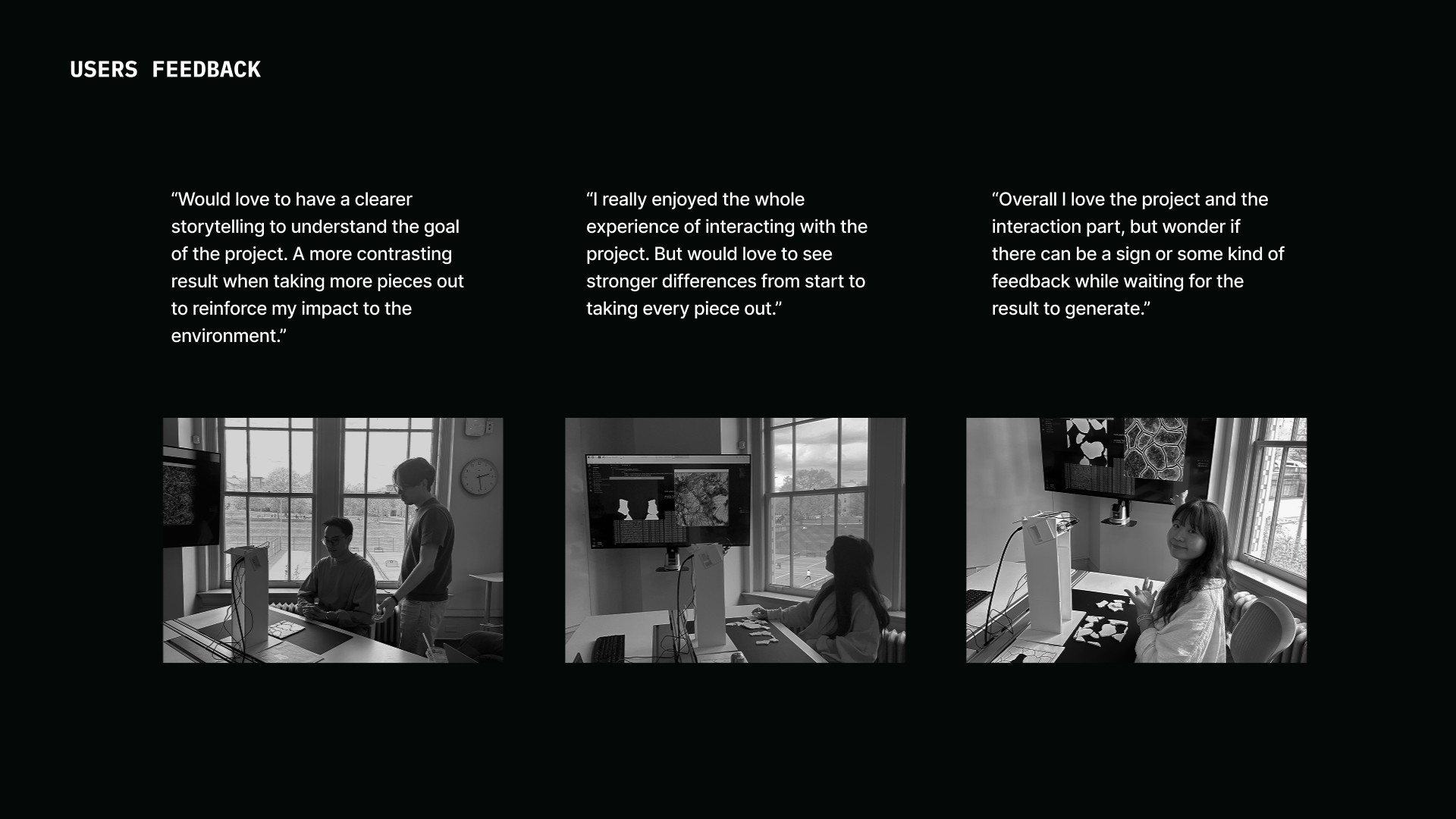
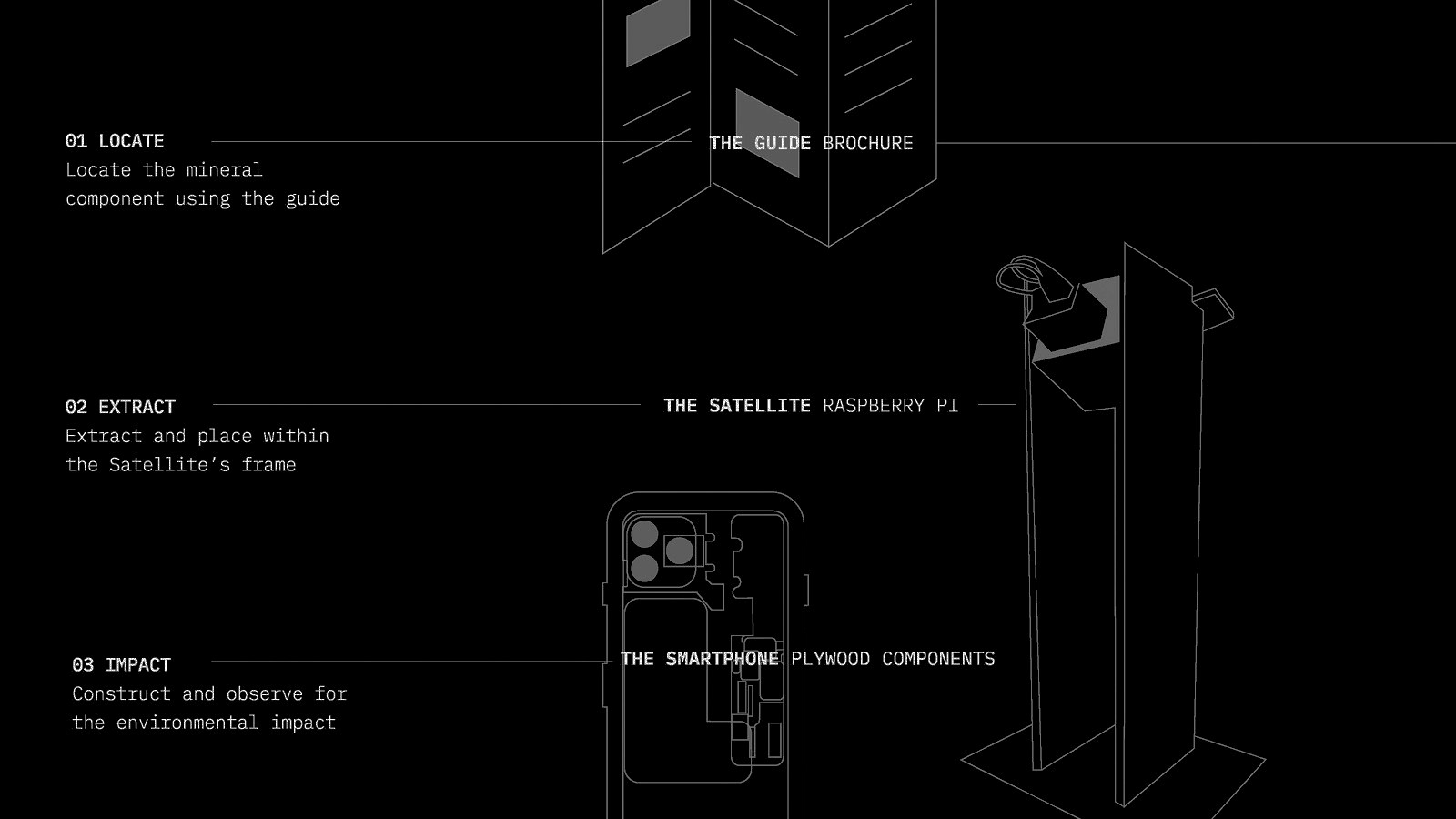
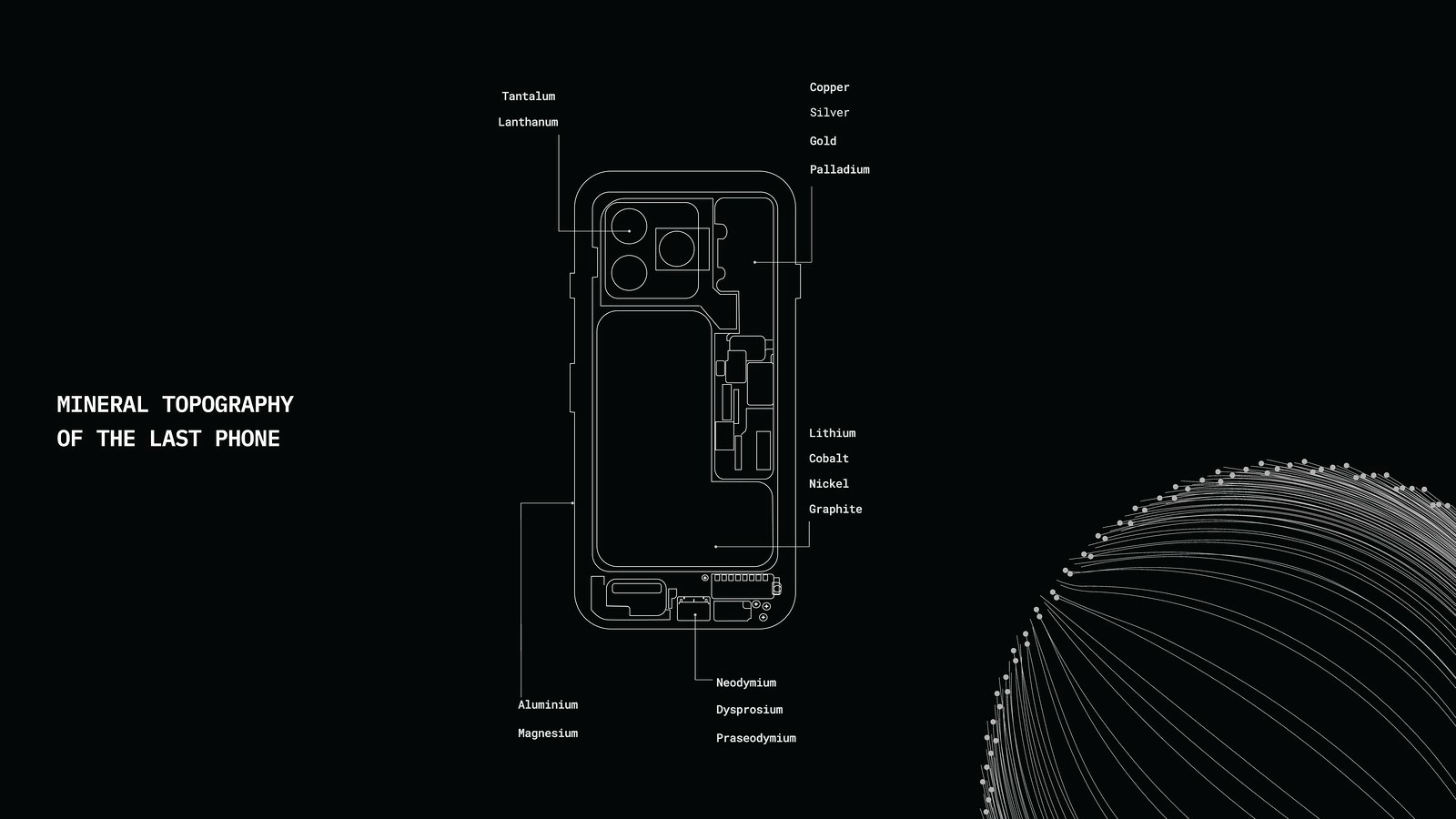
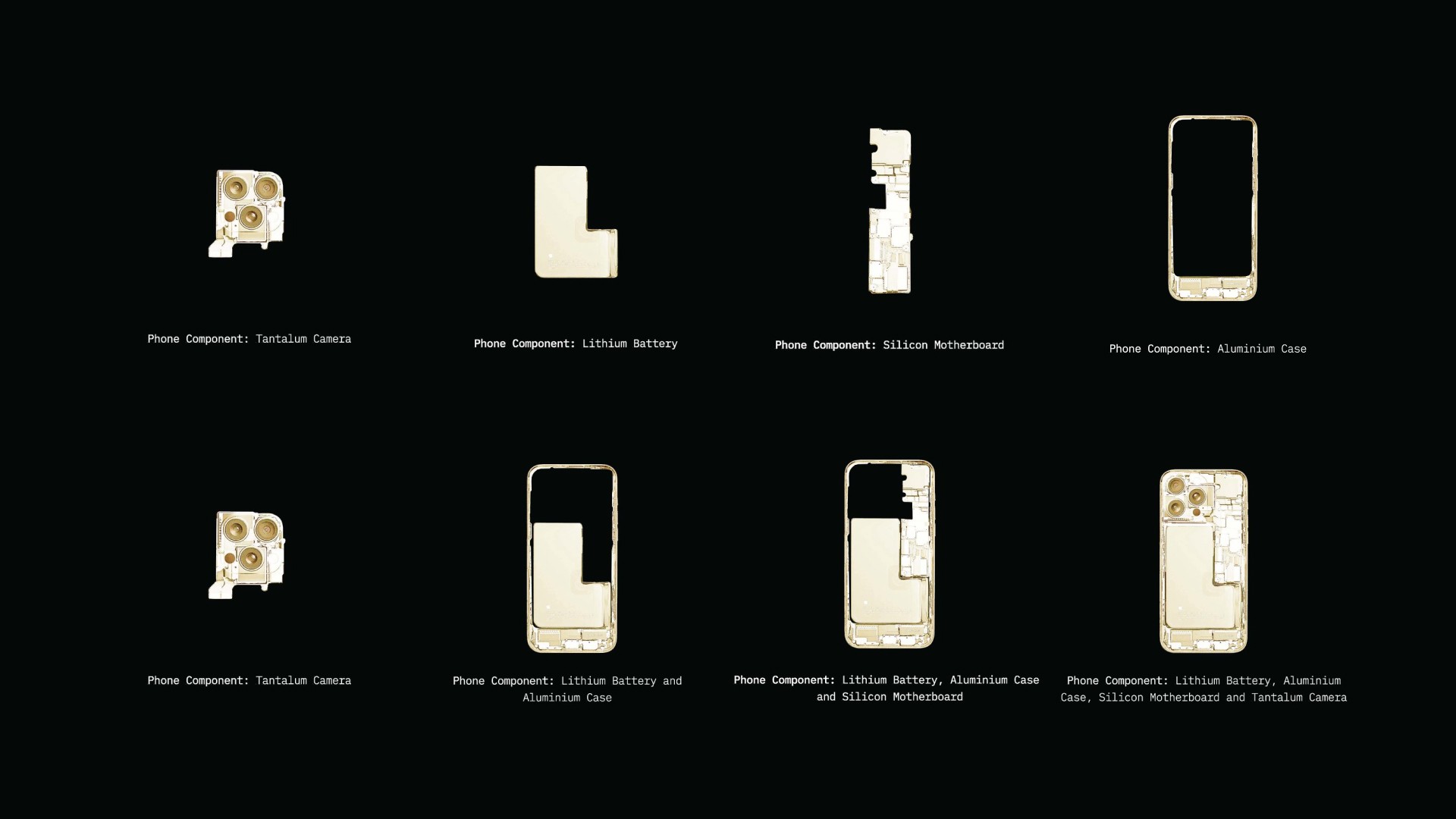
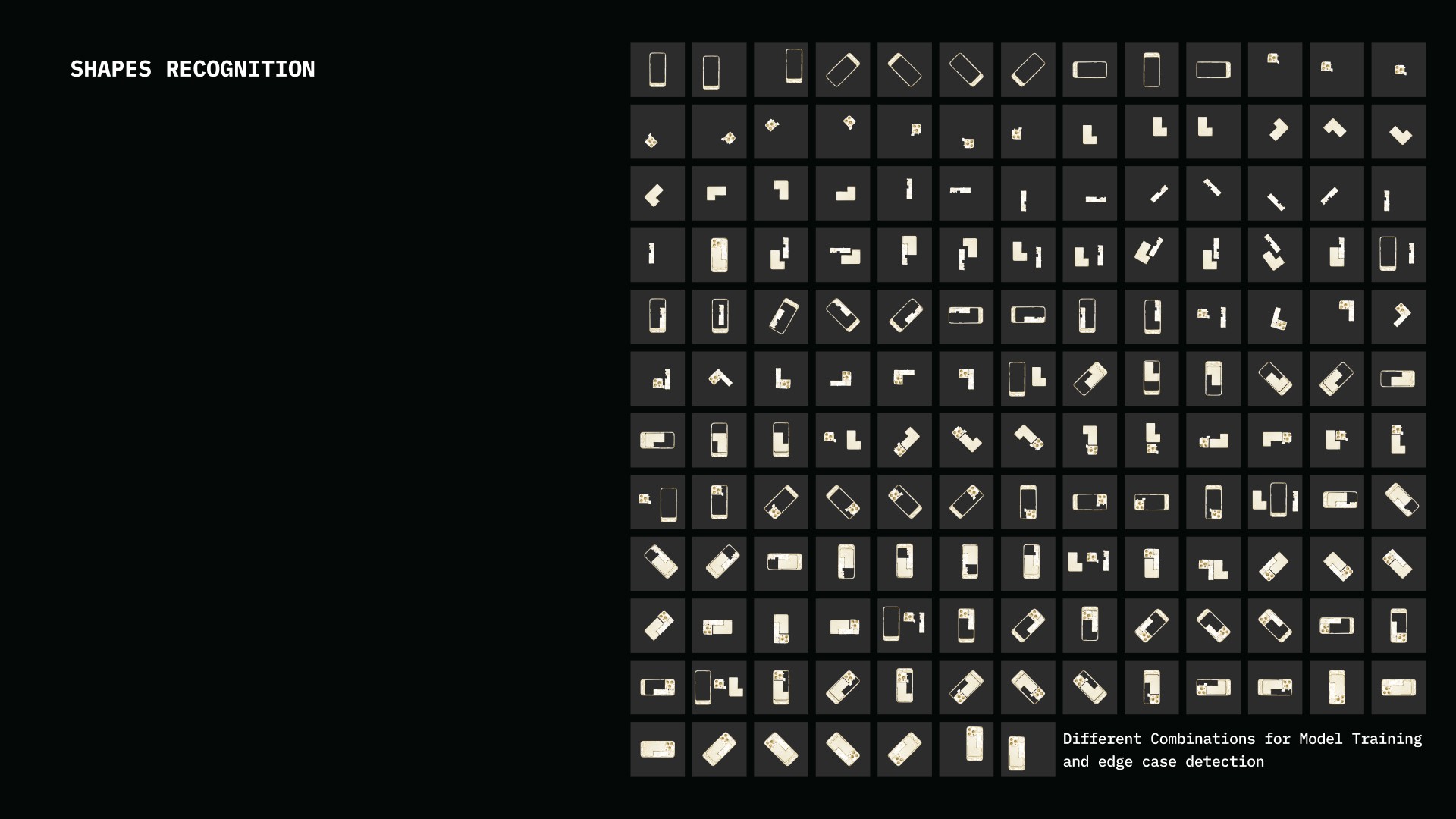
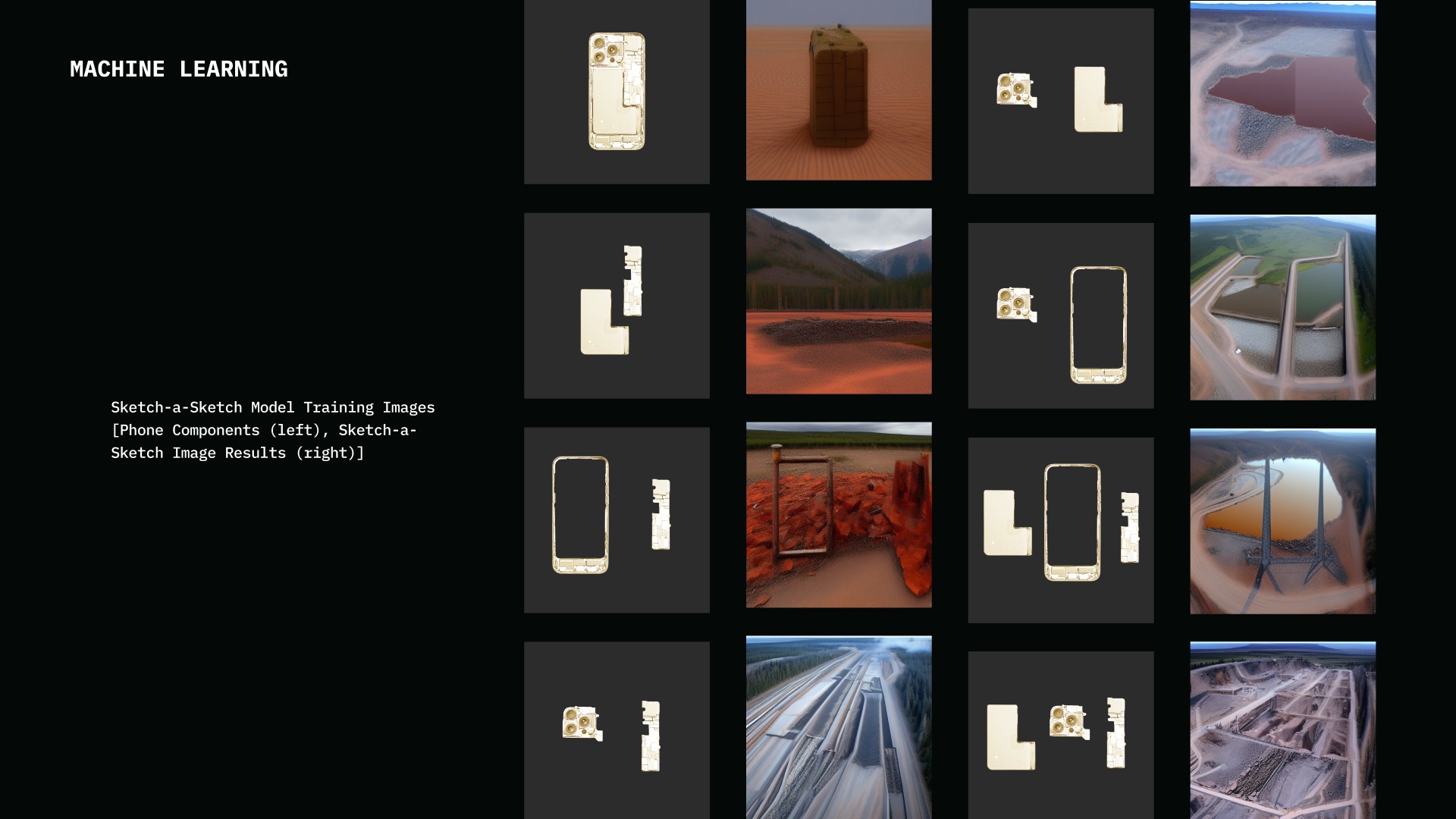
This project explores AI’s role in interaction design as a tool for creativity, not replacement. Using tools like ChatGPT, Runway ML, and Teachable Machine, we rapidly ideated, prototyped, and iterated—from an image recognition model to a real-time interactive experience. It also revealed the hidden systems behind technology, challenging the idea of tech as intangible. From resource extraction in the Democratic Republic of Congo to global production and distribution, the project highlights the material and environmental impact embedded in every digital interaction.
